
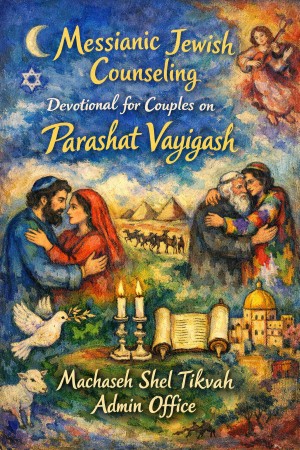
Messianic Jewish Counseling Devotional for Couples on Parashat Vayigash
Parashat Vayigash: “Drawing Near: Healing Through Truth and Reconciliation”
Bereshit/Genesis 44:18–47:27
Listen to your Devotional HERE
Core Theme for Couples
Drawing near with honesty, vulnerability, and compassion: allowing truth, forgiveness, and G-d’s redemptive purposes to heal relationships.
Devotional Reflection
Parashat Vayigash begins with one of the most emotionally charged moments in the Torah:
Then Judah drew near to him…” (Bereshit/Genesis 44:18)
The Hebrew word Vayigash means to approach, to come close
This is not just a physical movement; it is also emotional, relational, and spiritual. Judah steps forward not with accusation or defense, but with humility, responsibility, and love for his family.
In this moment, years of pain, betrayal, and silence are about to be transformed. Joseph, once the betrayed brother, now reveals his true identity. Tears flow. Truth is spoken. Healing begins.
For couples, Vayigash speaks to moments when healing requires courage:
Drawing near after being hurt
Speaking truth without cruelty
Choosing reconciliation over control
Trusting G-d with vulnerability
Ben Yoseph (Joseph) declares a truth that reframes the past:
“You meant evil against me, but G-d meant it for good.” (Bereshit/Genesis 50:20)
This does not minimize pain; it redeems it.
Yeshua reflects this same redemptive posture:
“Blessed are the merciful, for they shall obtain mercy.” (Mattityahu/Matthew 5:7)
Marriage becomes a place of healing when both partners are willing to draw near, even when it feels risky.
Couples Counseling Insight (CBT-Informed)
Judah takes responsibility rather than deflecting blame. Joseph chooses empathy rather than revenge—both model emotional regulation and truth-based thinking.
Common distorted thoughts in relationships include:
“If I open up, I’ll be hurt again.”
“Forgiveness means what happened didn’t matter.”
“I have to protect myself at all costs.”
Vayigash teaches cognitive and emotional integration:
Vulnerability can coexist with wisdom
Forgiveness is a process, not denial
Safety is built through truth and compassion
Healthy couples learn to approach conflict as allies, not adversaries.
Devotional Exercise for Couples
1. Drawing Near Conversation
Sit facing one another. One partner speaks while the other listens without interruption.
Discuss:
Where have we felt distant recently?
What feels hard to say, but important to share?
What would “drawing near” look like for us right now?
(Switch roles after 5–7 minutes.)
2. Naming the Truth with Compassion
Each partner completes this sentence:
“One truth I want to share with love is __________.”
Focus on feelings and needs, not blame.
Example:
“I feel afraid when we don’t talk about finances.”
“I need reassurance when conflict lasts too long.”
This mirrors Judah’s approach, honest, respectful, and grounded.
3. Prayer of Reconciliation
Pray together (or read aloud):
Avinu Malkeinu,
Teach us how to draw near with humility and courage.
Heal the places where silence, fear, or pride have kept us apart.
Help us speak truth with love and receive one another with compassion.
Like Joseph and Judah, may reconciliation flow from Your redemptive hand.
Restore trust, deepen unity, and fill our home with shalom.
In the name of Yeshua, Amen.
Closing Encouragement
Vayigash reminds us that reconciliation often begins with one brave step forward.
When couples choose honesty over hiding and compassion over control, G-d brings restoration that blesses generations, just as Joseph’s reconciliation saved an entire family.
May your marriage be a place where hearts draw near, truth is spoken in love, and G-d’s redemptive purposes are revealed.
Shabbat shalom, and may your home be filled with healing, courage, and peace.
Request your Devotional at contact@machasehsheltikvah.org
Machaseh Shel Tikvah Admin Office
Series Note: This devotional is part of “Walking Together in Covenant,” a Messianic Jewish Counseling Devotionals for Couples Series from Machaseh Shel Tikvah (Shelter of Hope) for Counseling, a member of the Village of Hope & Justice Ministry Family. Each weekly devotional follows the Torah portions of the Tanakh and the Brit Chadashah, offering couples space for reflection, journaling, prayer, and emotional and spiritual growth within the covenant.