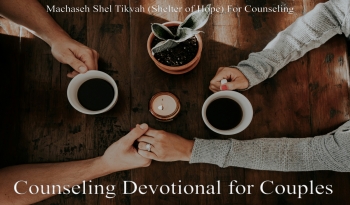

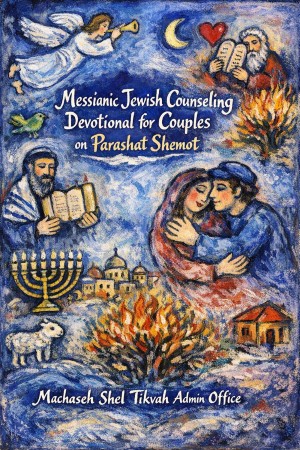
Messianic Jewish Counseling Devotional for Couples on Parashat Shemot
Parashat Shemot: “Beginning Again: Identity, Calling, and Covenant Under Pressure”
Shemot / Exodus 1:1–6:1
Listen to your Devotional HERE
Series Transition Note
With Parashat Shemot, we begin a new book of the Torah and the Tanakh, Shemot (Names in Hebrew, Exodus in English), the second of the Five Books of Moses. While Bereshit (Genesis) focused on origins, family formation, and covenant promises, Shemot moves us into names: identity, endurance, and redemption. For couples, this transition mirrors seasons where a relationship moves from formation into testing, where love is no longer theoretical but practiced under pressure.
Core Theme for Couples
Walking together through pressure and uncertainty while anchoring identity, communication, and hope in G-d’s covenant faithfulness.
Devotional Reflection
Parashat Shemot (Names) opens with names: “These are the names of the sons of Israel who came to Egypt…” (Shemot/Exodus 1:1)
The book begins by reminding us that before oppression, there was identity. Before slavery, there was belonging. Yet a new Pharaoh arises, one who “did not know Ben Yoseph/Joseph,” and fear replaces gratitude. Pressure increases. Lives become constrained. In this environment, G-d begins His redemptive work not with miracles, but with presence, a baby preserved, women who choose courage, and eventually a reluctant leader encountering G-d in a burning bush.
Marriage, too, enters seasons where pressure tests identity. Stress, change, unmet expectations, or past wounds can make partners feel unseen or unheard. Shemot teaches us that a covenant does not disappear in hardship; it is revealed there.
Yeshua echoes this truth: “Whoever remains in Me and I in him bears much fruit.”
(Yochanan/John 15:5. Connection sustains calling. Presence precedes freedom.
Couples Counseling Insight (CBT-Informed)
In Shemot, fear shapes behavior, both in Pharaoh’s oppression and Moses’ hesitation.
Common distorted thoughts couples experience under pressure include:
• “We’re stuck like this.”
• “You don’t really see me anymore.”
• “If I speak up, it will only get worse.”
Shemot reframes these beliefs:
• Pressure does not erase identity
• Avoidance delays freedom
• G-d meets us before we feel ready
CBT reminds couples that naming thoughts, regulating emotions, and choosing connection over fear leads to resilience and growth.
Devotional Exercises for Couples
1. Naming Identity Together
Sit together and complete this sentence aloud:
“Even in this season, one truth about who we are together is __________.”
Please just listen without correcting or defending.
2. Burning Bush Conversation
Reflect gently:
• Where do we feel stretched, overwhelmed, or hesitant right now?
• How might G-d be present in this exact place, not after it passes?
• What is one small step of obedience or honesty we can take together?
3. Prayer for Courage and Connection
Avinu Malkeinu,
Thank You for calling us by name and walking with us in every season.
When fear rises and pressure grows, help us remain present with You and with each other.
Teach us to listen, to speak with compassion, and to trust Your redemptive work in our marriage.
Lead us toward freedom, together. In the name of Yeshua the Messiah, Amen.
Closing Encouragement
Parashat Shemot reminds us that redemption begins not when circumstances change, but when identity is reclaimed, and G-d’s presence is welcomed. As you begin this new book together, may your marriage remain anchored in covenant, strengthened through challenge, and open to G-d’s transforming work. Shabbat shalom.
Request your Devotional at contact@machasehsheltikvah.org
Machaseh Shel Tikvah Admin Office
Series Note: This devotional is part of “Walking Together in Covenant,” a Messianic Jewish Counseling Devotionals for Couples series from Machaseh Shel Tikvah (Shelter of Hope) for Counseling, a member of the Village of Hope & Justice Ministry Family.