
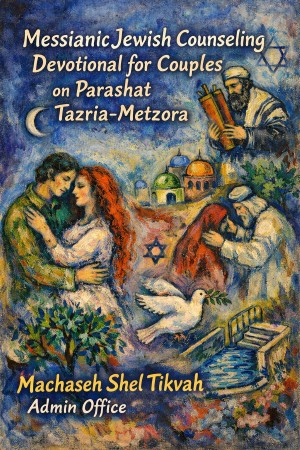
Messianic Jewish Counseling Devotional for Couples on Parashat Tazria–Metzora
You can listen to your Devotional HERE
Parashat Tazria–Metzora: “Healing the Unseen: Words, Wounds, and Restoration in Covenant Love”
Torah: Leviticus 12:1 – 15:33
Theme for Couples: Cultivating Healing, Responsibility, and Restoration Through Honest Communication and Emotional Awareness
Opening Reflection
Parashat Tazria–Metzora explores deeply personal and often hidden experiences—conditions of the skin, the home, and the body that render a person tamei (ritually unclean). These conditions are not merely physical; they point to something beneath the surface that requires attention, care, and ultimately, healing. In Jewish tradition, tzara’at is often associated with harmful speech (lashon hara), words that wound, isolate, and break trust.
In marriage, not all wounds are visible. Words spoken in frustration, silence used as withdrawal, or unresolved hurts can quietly create distance between partners. Like tzara’at, these relational fractures may begin small but grow if left unaddressed. Yet this Parashah is also filled with hope. It provides a pathway for restoration, examination, honesty, and re-entry into connection. This portion gently invites couples to bring hidden hurts into the light, to take responsibility with compassion, and to walk together toward healing and renewed closeness.
1. Hidden Wounds Require Gentle Attention
Torah Insight: The priest carefully examines skin conditions, looking beneath the surface before making a declaration.
Marriage Insight: Emotional wounds in a relationship are not always obvious. Hurt feelings, insecurity, or fear may be concealed beneath daily interactions.
Counseling Principle: Healing begins with awareness. Creating a safe space to gently explore feelings allows hidden wounds to be acknowledged and addressed.
2. Words Carry the Power to Harm or Heal
Torah Insight: Tzara’at is traditionally linked to harmful speech, words that separate individuals from the community.
Marriage Insight: Words spoken in anger, criticism, or defensiveness can create emotional distance. Conversely, words of kindness and understanding restore connection.
CBT Reflection (gentle awareness):
You might notice thoughts like:
“They always talk to me this way,” or
“I can’t say anything without it turning into a conflict.”
These may reflect overgeneralization or all-or-nothing thinking, which can intensify emotional pain.
Counseling Principle: Slowing down communication and choosing words intentionally fosters safety and connection.
3. Separation Can Create Space for Healing
Torah Insight: Those affected by tzara’at temporarily dwell outside the camp, not as punishment, but as a process of reflection and restoration.
Marriage Insight: At times, couples may need space to process emotions before reconnecting. Healthy space is not rejection; it can be a pathway to clarity.
Counseling Principle: Taking intentional pauses during conflict allows emotions to settle and prevents further harm.
4. Restoration Is a Sacred Process
Torah Insight: The purification process is detailed and intentional, involving time, offerings, and priestly care before re-entry into the community.
Marriage Insight: Repairing emotional wounds takes time, humility, and consistent effort. Trust is rebuilt through repeated acts of care and accountability.
Counseling Principle: True repair includes acknowledgment, responsibility, and changed behavior—not just apology.
Reflection Questions for Couples
Are there unspoken hurts or concerns that we have been avoiding?
How do our words impact one another during moments of stress or conflict?
Do we allow space for processing, or do we push for immediate resolution?
What steps can we take to intentionally rebuild trust and connection where needed?
Gentle Guided Reflection (CBT-Informed)
If you notice a thought like:
“Our relationship is too damaged to fix,”
let’s gently explore it together:
What experiences have led me to feel this way?
Are there moments, even small ones, where connection or care still exists?
Am I viewing this situation as permanent without considering the possibility of growth?
What would a more balanced perspective sound like?
Thought Clarity Option:
“Our relationship has experienced hurt, but with care, honesty, and support, healing is possible step by step.”
(You’re free to accept, reshape, or release this thought, what matters is finding one that brings steadiness and hope.)
Prayer for Couples
Abba Father,
You are our Healer, the One who sees what is hidden and restores what is broken. Teach us to be mindful of our words and gentle with one another’s hearts. Reveal areas in our relationship that need healing, and give us courage to face them with humility and love.
Help us to take responsibility where we have caused pain, and to extend grace where wounds remain. Guide us in rebuilding trust with patience and sincerity.
May our relationship reflect Your healing power, marked by truth, compassion, and restoration. Let Your Presence dwell within our home, bringing wholeness and peace.
In the name of Yeshua the Messiah, Amen.
Shabbat Shalom.
May your relationship be a place of healing, where wounds are met with compassion and love is renewed through truth and grace.
Request your Devotional at: contact@machasehsheltikvah.org
Machaseh Shel Tikvah Admin Office
Series Note: This devotional is part of “Walking Together in Covenant,” a Messianic Jewish Counseling Devotionals for Couples series from Machaseh Shel Tikvah (Shelter of Hope) for Counseling, a member of the Village of Hope & Justice Ministry Family.